

Have you ever wondered whether seniors—even in their 80s and 90s—could build muscle and get significantly stronger?
Well, I was recently sent an article about a landmark 1988 study on strength training for older adults that offers a very clear answer, which is…absolutely yes.
This research, at the time, shattered the widespread skepticism and misunderstanding around weight training and proved that it’s never too late to get stronger.
How I Came Upon the Study
Ever since I started lifting weights in the 1980s, it sparked in me an insatiable urge to understand why and how strength training works. Decades later, that curiosity hasn’t faded. But now that I’m in my 70s instead of my 20s, my focus has shifted to knowing more about strength, aging, and longevity.
And my members know this about me, which is why I’m often sent articles about health, fitness, and especially anything related to senior fitness. Which is how I came to see the article about this study.
The 1988 Study Objectives
This remarkable study was spearheaded by a young physician, Dr. Maria Fiatarone (1). There was one simple objective–see if frail older adults could get the same muscle-building benefits from high-intensity strength training as their younger counterparts.
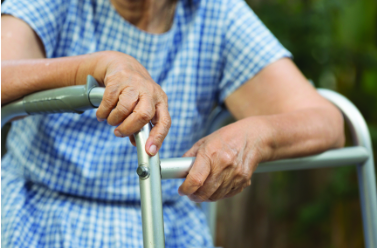
So, Dr. Fiatarone purposely chose 10 frail older individuals (86-96) from a Boston nursing home who had 1) already suffered multiple falls due to muscle weakness, 2) had multiple medical conditions, including arthritis, heart disease, high blood pressure, and osteoporosis, and 3) were using a cane or a walker to move about.
What the Participants Did for their Exercise
The exercise protocol was straightforward: one exercise, three sets of eight reps, three times a week for eight weeks. Slow and controlled.
The movement was the seated leg extension, chosen because it can be done from a chair and because the quadriceps or thigh muscles are essential for standing and walking.
Results that Shocked the Research Community
Of the nine participants who completed the study, every single one got stronger. The average strength gain was an incredible 174%.
But the truly groundbreaking part was this: their muscles didn’t just get stronger—they got bigger, showing nearly the same degree of muscle growth you’d expect from a much younger person.
And remember, these amazing results were not due to long hours of training, but were achieved by doing just 3 sets of 8 repetitions done 2 days a week for only 8 weeks. Which worked out to be about a 45-minute exercise routine per session.
Why This Study Matters for Seniors
When the study was published in the Journal of the American Medical Association, it became a paradigm shift in how scientists understood muscle, strength, and aging.
Before this study, there was widespread skepticism and misunderstanding about weight training—much of it fueled by misconceptions tied to the bodybuilding culture and steroid use. Since my own strength journey started during this time, in hindsight, I understand why many professionals would have been so hesitant about such an undertaking.
Sadly, it was these misconceptions that kept valuable knowledge away from the general public, especially older adults. And even today, I still see gaps in the understanding among some medical professionals on how to keep seniors strong, active, and independent.
Thankfully, the shift is happening again, and more experts are encouraging seniors not to fear training heavy—and this 1988 study is a big reason why.
What Happened After the Study?
It’s noteworthy to mention that after the study, all the participants went back to a sedentary lifestyle since the nursing facility had no workout area. At the one-month mark, when Dr. Maria Fiatarone went back to re-evaluate the participants, they had already lost a third of their strength.
This prompted her to comment in the published study that “changes in muscle function are not maintained for long periods of time, in the absence of continued training.” And that “an ongoing program of muscle reconditioning” would be necessary for ongoing improvement.
Agile 4 Life Members are Proof of the Study’s Results
The A4LF programs allow our 60-80-year-olds to stay strong enough to do all of the activities they enjoy: skiing, hiking, camping, biking, playing sports, traveling, and more, all while decreasing their fall risk. And it’s our experienced trainers who make it safe, enjoyable, and productive. Try a FREE Restart Smart class and see how easy it is for you to regain your muscle strength.
(1) https://www.theguardian.com/wellness/2025/mar/11/older-adults-strength-training
(2) https://www.hebrewseniorlife.org/blog/study-redefined-how-we-view-strength-training-and-aging